




Article
AI Is Coming for Americans’ Jobs! Here’s How to Survive It
Artificial intelligence is no longer a distant concept reserved for tech companies and Silicon Valley insiders. It is actively reshaping how Americans work, earn, and build financial stability. From warehouses to offices, from customer service to creative industries, AI is changing jobs faster than many people expected. For Black Americans in particular, this shift carries both risk and opportunity. Historically, economic disruptions have disproportionately impacted Black workers, yet moments of transformation have also created pathways for ownership, innovation, and generational wealth. This moment is no different. The question is not whether AI will affect American jobs, but whether Black entrepreneurs and aspiring business owners will be prepared to survive—and thrive—in this new economic era.

Why AI Is Reshaping the American Job Market
AI is fundamentally changing the structure of American jobs because it replaces repetition, automates decision-making, and operates at scale. Tasks that once required entire departments can now be handled by algorithms in seconds. Companies are adopting AI not out of curiosity but out of necessity, driven by cost-cutting, speed, and competitive pressure. This is why AI is affecting jobs across industries, not just in technology. Transportation, retail, marketing, logistics, finance, and even healthcare are experiencing workforce shifts. For Americans who rely on traditional employment for income security, this transformation introduces uncertainty. But for those willing to think beyond jobs and toward ownership, AI can become a powerful lever rather than a threat.
How Job Displacement Has Historically Affected Black Americans
Black Americans have often been the first to feel the impact of economic disruption and the last to benefit from recovery. Automation, outsourcing, and policy changes have historically reduced access to stable jobs in manufacturing, transportation, and administrative roles—industries where Black workers were heavily represented. AI threatens to repeat this pattern if preparation and strategy are ignored. However, history also shows that Black communities have consistently created parallel economies through entrepreneurship, service businesses, and innovation. AI does not erase this tradition. Instead, it accelerates the need for it. Understanding this historical context is critical because it reframes AI not as an isolated threat but as part of a long-standing economic cycle that demands ownership-focused solutions.
Why AI Poses a Unique Threat to Traditional Jobs
The danger AI poses to American jobs lies in its ability to replicate tasks without fatigue, wages, or benefits. Unlike past technological changes that still required human oversight, modern AI systems learn, adapt, and improve autonomously. This means entry-level and mid-level jobs—often used as stepping stones to financial stability—are disappearing faster than replacement roles are created. For Black workers, who already face wage gaps and limited access to advancement, this erosion of job ladders can be devastating. Yet this same capability makes AI an accessible business partner for entrepreneurs who learn how to harness it rather than compete against it.
The Opportunity Hidden Inside the AI Disruption
Every major economic shift creates winners alongside losers. AI is no exception. While it eliminates certain jobs, it dramatically lowers the cost of starting and scaling businesses. Tasks that once required teams, agencies, or significant capital can now be handled by affordable AI tools. This democratization of capability is particularly important for Black entrepreneurs, who often face limited access to funding. AI allows small businesses to compete with larger corporations by improving efficiency, customer service, marketing, and operations. The opportunity lies not in resisting AI, but in integrating it intentionally into business strategies.
AI as a Tool for Black Entrepreneurs, Not a Replacement
AI does not replace vision, leadership, or cultural understanding. These are human strengths—and they are areas where Black entrepreneurs excel. AI can write content, analyze data, automate scheduling, and manage workflows, but it cannot replace lived experience, community insight, or trust-based relationships. When Black-owned businesses use AI as a tool rather than a substitute, they gain leverage. This distinction matters because it shifts the narrative from job loss to value creation. Entrepreneurs who understand how to combine AI efficiency with authentic community engagement will be best positioned to succeed.
Why Entrepreneurship Is Becoming a Survival Strategy
For many Americans, entrepreneurship is no longer just a dream—it is becoming a necessity. As AI reshapes jobs, relying on a single employer becomes increasingly risky. Black entrepreneurs have long understood the importance of multiple income streams and self-determination. AI accelerates this reality. Starting a business, side hustle, or digital service is now more accessible than ever, especially when AI reduces startup costs. Entrepreneurship is no longer about working harder; it is about working smarter, owning systems, and controlling outcomes.
Lowering Barriers to Entry With AI-Powered Businesses
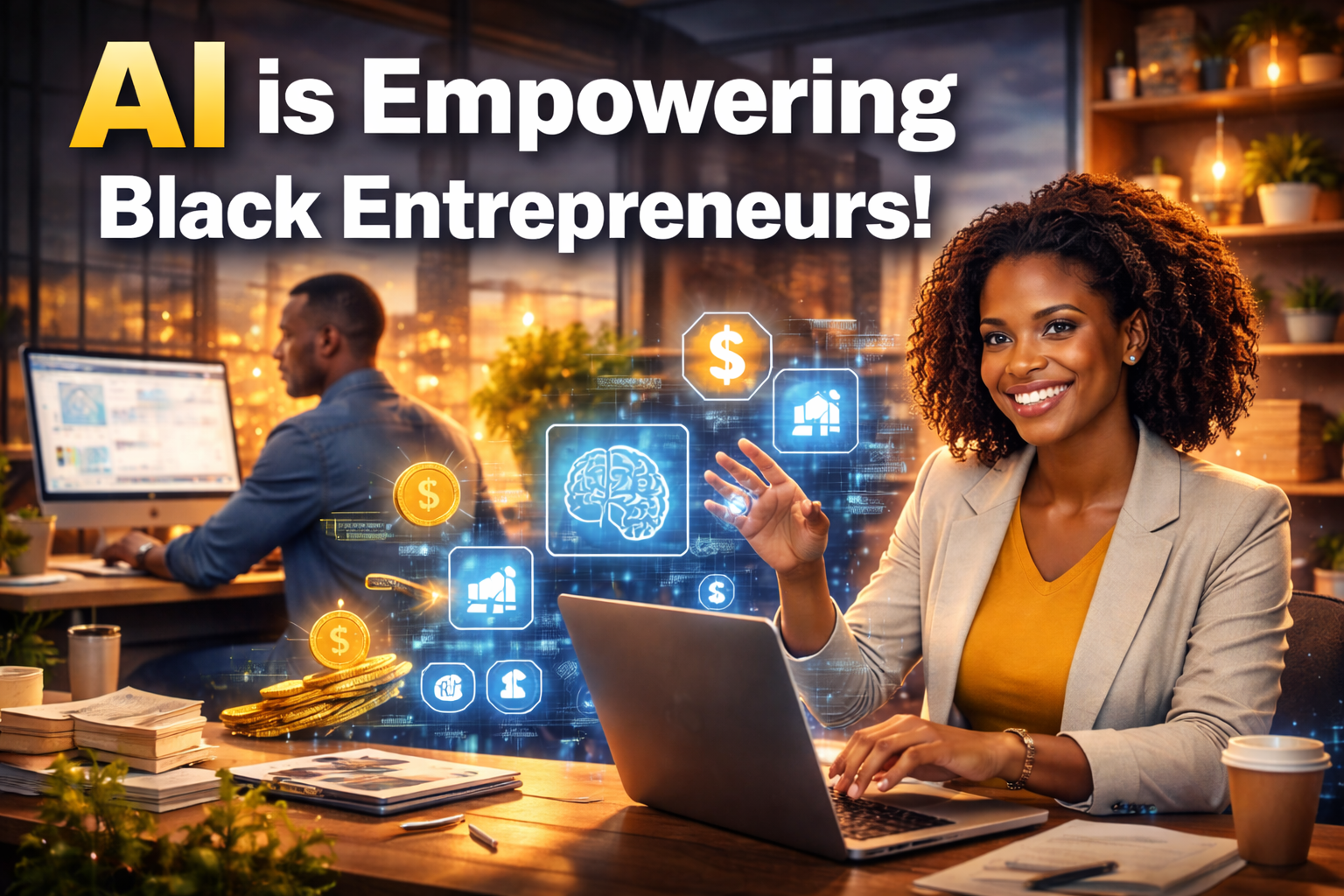
One of the most powerful aspects of AI is how it lowers barriers that once excluded many Black entrepreneurs. Building a website, managing customer communication, creating marketing materials, and analyzing performance data no longer require large budgets or specialized teams. AI enables solopreneurs and small businesses to operate at a professional level from day one. This shift is critical for Black Americans who may not have access to traditional venture capital or business networks. AI becomes an equalizer, offering tools that reward creativity and strategy over capital alone.
Building Businesses That Are AI-Resilient
Surviving the AI revolution requires building businesses that are adaptable rather than rigid. AI-resilient businesses focus on services, creativity, personalization, and community connection—areas where automation struggles to fully replace human input. Black entrepreneurs who design businesses around flexibility, learning, and continuous improvement will be better positioned to navigate future changes. AI should be embedded into operations as an assistant, not a dependency. This mindset ensures long-term sustainability rather than short-term efficiency.
Why Ownership Matters More Than Ever
AI highlights a truth Black communities have long understood: ownership is the most reliable path to economic stability. Jobs can be automated, outsourced, or eliminated, but ownership creates control. Whether it is owning a business, a brand, intellectual property, or a platform, ownership allows individuals to benefit from technological change rather than be harmed by it. AI makes ownership more attainable, not less. The challenge is shifting mindset from job security to asset building, a transition that MyBrothaSpot actively supports.
How Platforms Like MyBrothaSpot Support This Transition
MyBrothaSpot exists to amplify Black-owned businesses and create visibility in a rapidly changing economy. As AI reshapes how Americans find services, make purchasing decisions, and build trust, platforms that highlight Black entrepreneurship become even more valuable. Visibility is power in the digital age. MyBrothaSpot helps bridge the gap between innovation and community by providing a space where Black entrepreneurs can be discovered, supported, and scaled. In an AI-driven economy, platforms that prioritize cultural relevance and economic empowerment are essential.
Preparing the Next Generation for an AI Economy
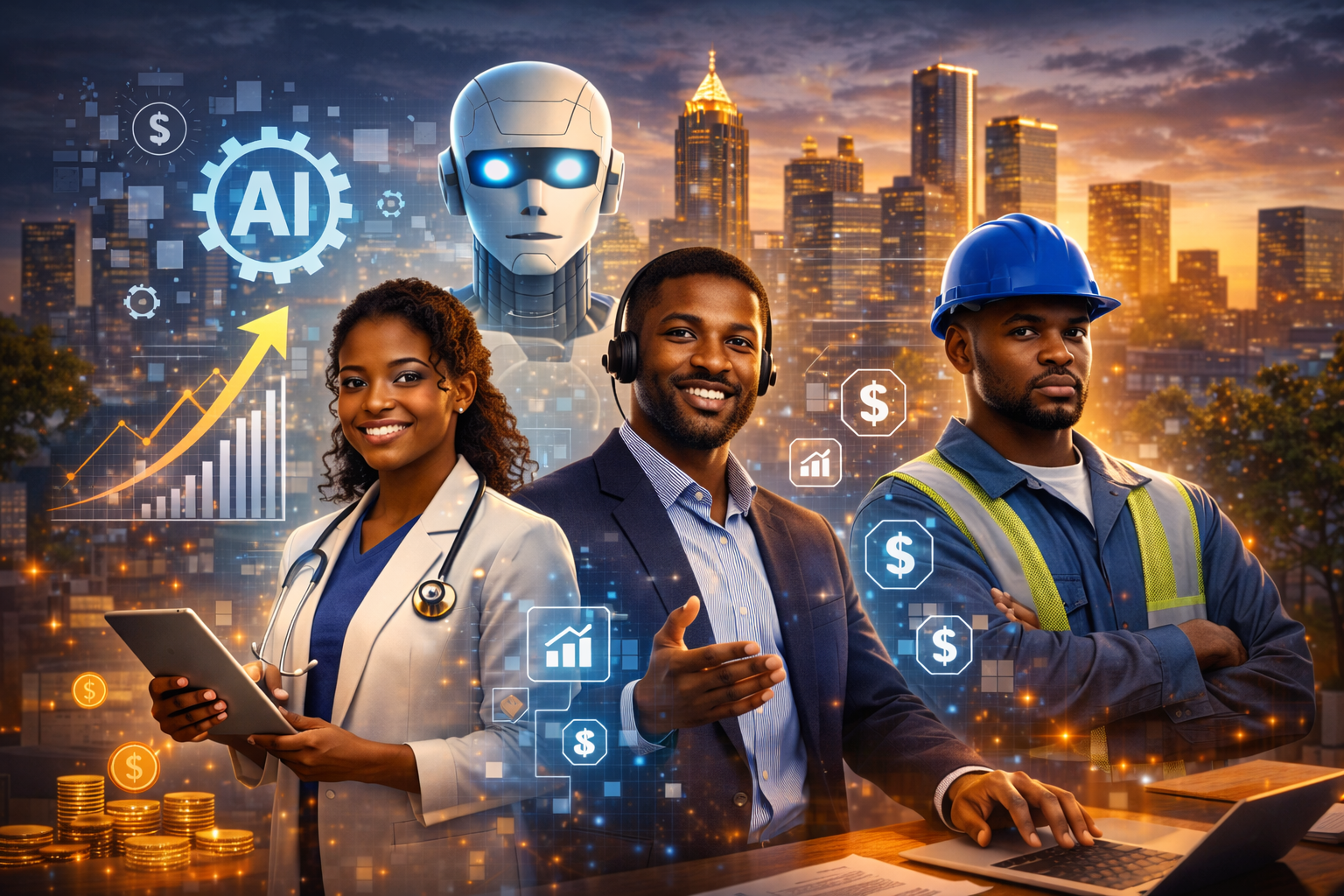
The conversation about AI and jobs is incomplete without addressing the next generation. Black youth must be prepared not just to use AI, but to understand it strategically. Exposure to entrepreneurship, digital tools, and ownership-focused thinking is critical. AI literacy should be viewed as a form of economic defense, ensuring that future generations are creators rather than casualties of technological change. Teaching adaptability, critical thinking, and business fundamentals will matter more than memorizing any single technical skill.
Turning Fear Into Strategy
Fear is a natural response to change, especially when livelihoods are at stake. But fear becomes dangerous when it leads to inaction. The rise of AI in American jobs should be a catalyst for strategy, education, and community collaboration. Black entrepreneurs who approach AI with curiosity rather than resistance will uncover opportunities others miss. The goal is not to predict every change, but to build skills, businesses, and networks that can evolve alongside technology.
AI is coming for Americans’ jobs, but it does not have to come for our futures. For Black entrepreneurs and aspiring business owners, this moment represents a turning point. AI can either deepen existing inequalities or become a tool for economic liberation. Survival in the AI era is not about competing with machines—it is about owning systems, building businesses, and leveraging technology with intention. At MyBrothaSpot, the mission remains clear: support Black-owned businesses, promote entrepreneurship, and help our community not just survive change, but lead it. The future belongs to those who prepare for it, and that preparation starts now.
share this
Related Articles
Related Articles



STAY UP TO DATE
kEEP UP WITH WHAT'S GOOD AT MYBROTHASPOT
Receive frequent updates from Mybrothaspot, and get a heads up on upcoming events.
Contact Us