


Article
Why African Americans Should Create a Self-Funding Economic System
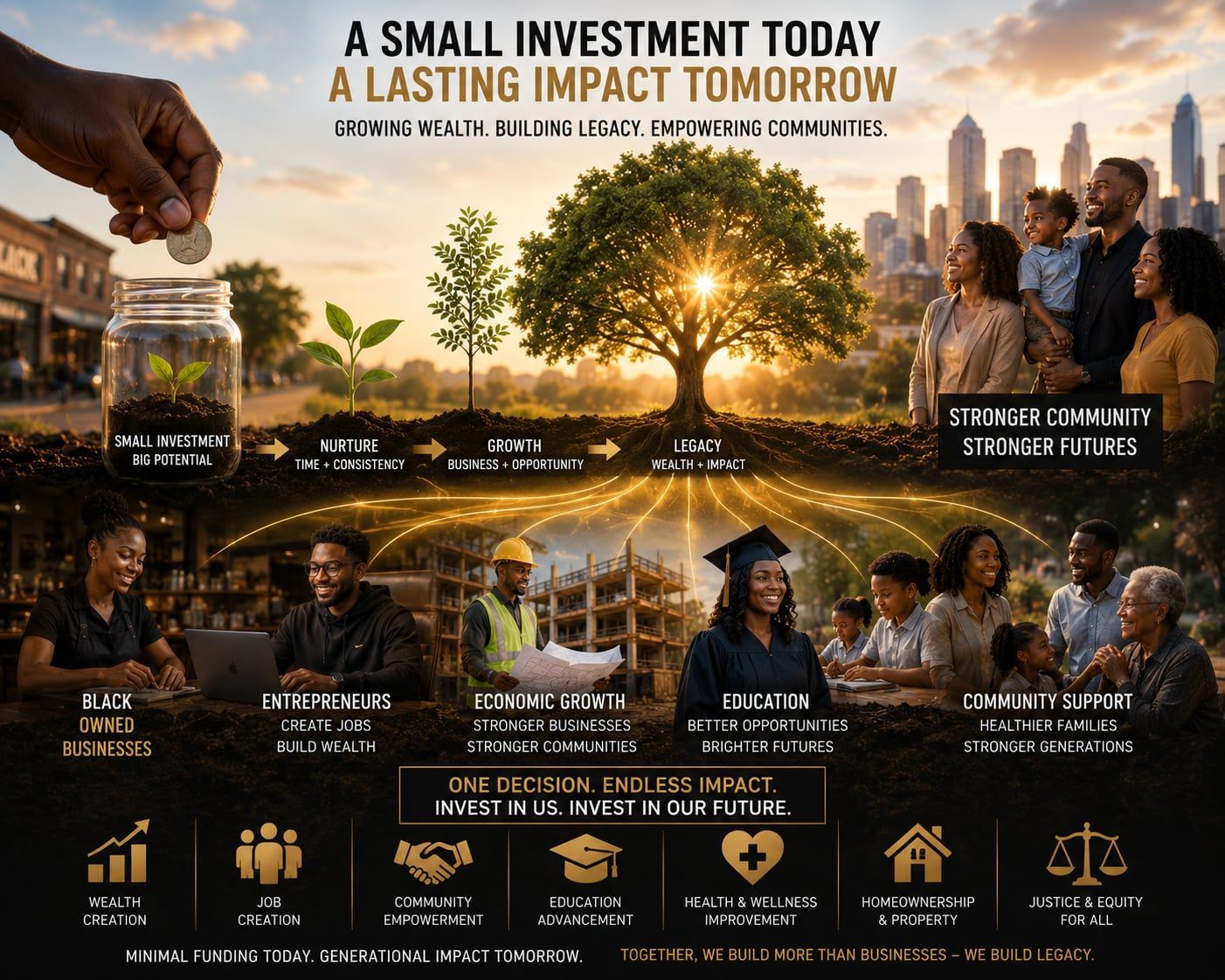
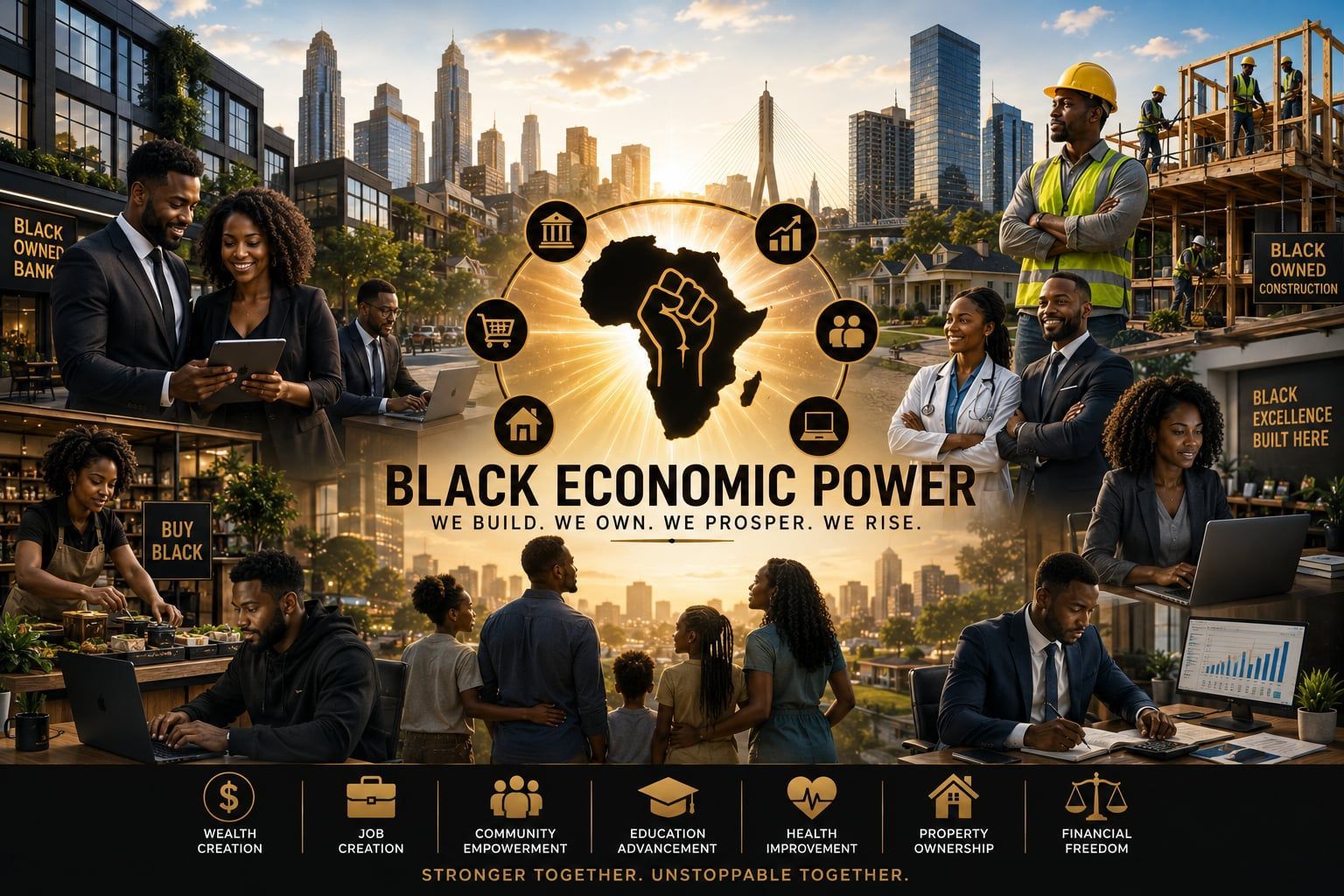
Throughout American history, African Americans have overcome incredible obstacles through resilience, creativity, and determination. Despite centuries of barriers, Black Americans have built thriving businesses, created influential cultural movements, and contributed billions of dollars to the United States economy. Yet one challenge continues to affect many Black communities: the lack of collective ownership and investment. Every year, African Americans spend hundreds of billions of dollars on products and services. Much of that money quickly leaves Black communities and rarely returns in ways that create long-term wealth. The issue is not a lack of spending power. The issue is organization. Imagine if a small percentage of African Americans decided to work together financially with a shared mission of economic empowerment. Imagine if 500,000 people contributed just $10 per month into a community investment system. That simple commitment would generate $5 million every month and $60 million every year. Those funds could be used to purchase property, support entrepreneurs, improve neighborhoods, and create opportunities for future generations. This idea is not about charity. It is about ownership, investment, and building economic systems that benefit the Black community for decades to come.
The $10 Challenge: Small Contributions Can Produce Massive Results
Many people spend $10 without giving it much thought. Ten dollars can disappear on coffee, fast food, streaming subscriptions, or impulse purchases. Individually, it seems insignificant. Collectively, however, it becomes powerful. Five hundred thousand people contributing $10 per month may sound simple, but the results are extraordinary. Five million dollars every month means sixty million dollars every year. In five years, that amount becomes $300 million. In ten years, the total reaches $600 million, even before accounting for profits from investments and business growth. The beauty of this concept is that it does not require everyone to be wealthy. It requires consistency. Building wealth is often less about large amounts of money and more about disciplined habits repeated over time. Communities around the world have successfully used cooperative economics to build businesses, banks, schools, and real estate portfolios. There is no reason African Americans cannot do the same.
Buy the Block: Investing in Commercial Real Estate
One of the smartest uses of a collective investment fund would be purchasing commercial real estate in Black communities. Commercial property is one of the most effective ways to create long-term wealth because it generates income while increasing in value over time. Imagine purchasing shopping centers, office buildings, warehouses, apartment complexes, and retail properties in predominantly Black neighborhoods. Instead of outside investors collecting rent from businesses operating in these communities, Black-owned investment groups could own the property and receive that income. Commercial real estate creates more than wealth. It creates control. Communities that own their property have greater influence over development decisions and can determine what businesses and services are available in their neighborhoods. Rental income from these properties could then be reinvested into acquiring more real estate, creating a cycle of growth and economic expansion. Over time, this system could establish an ownership economy where assets continuously generate wealth for the community.
Building Business From Within: Creating Entrepreneurial Centers
Many talented African Americans have excellent business ideas but lack access to resources, mentorship, and startup capital. A collective investment fund could address this challenge by establishing business incubators and entrepreneurial centers throughout the country. These centers could provide affordable office space, podcast studios, technology training, business coaching, legal assistance, accounting services, and access to marketing professionals. They could also offer education on artificial intelligence, e-commerce, digital marketing, and content creation. Young entrepreneurs often fail because they do not have access to the right environment. Talent alone is rarely enough. Success also requires guidance, networks, and support systems. Entrepreneurial centers would provide these resources and create environments where innovation can flourish.
Rather than waiting for outside institutions to create opportunities, African Americans could build their own systems that help aspiring business owners transform ideas into successful enterprises.
Rebuilding Our Communities Through Strategic Investments
Many Black communities have experienced decades of economic neglect and underinvestment. Vacant buildings, limited grocery options, inadequate services, and insufficient educational resources continue to affect countless neighborhoods across America.
A collective investment fund could begin changing this reality. Funding could be directed toward renovating abandoned properties, opening grocery stores in food deserts, developing affordable housing, creating community health clinics, and supporting transportation and logistics companies. Technology and trade schools could also be established to provide practical education and workforce development opportunities. These investments would improve neighborhoods physically while creating employment opportunities and stimulating local economic activity. Strong communities are not created by accident. They are built intentionally through investment, planning, and ownership. Economic development becomes more sustainable when the people making decisions also live in and care about the community's future.
Ownership Over Consumption: Changing the Economic Mindset
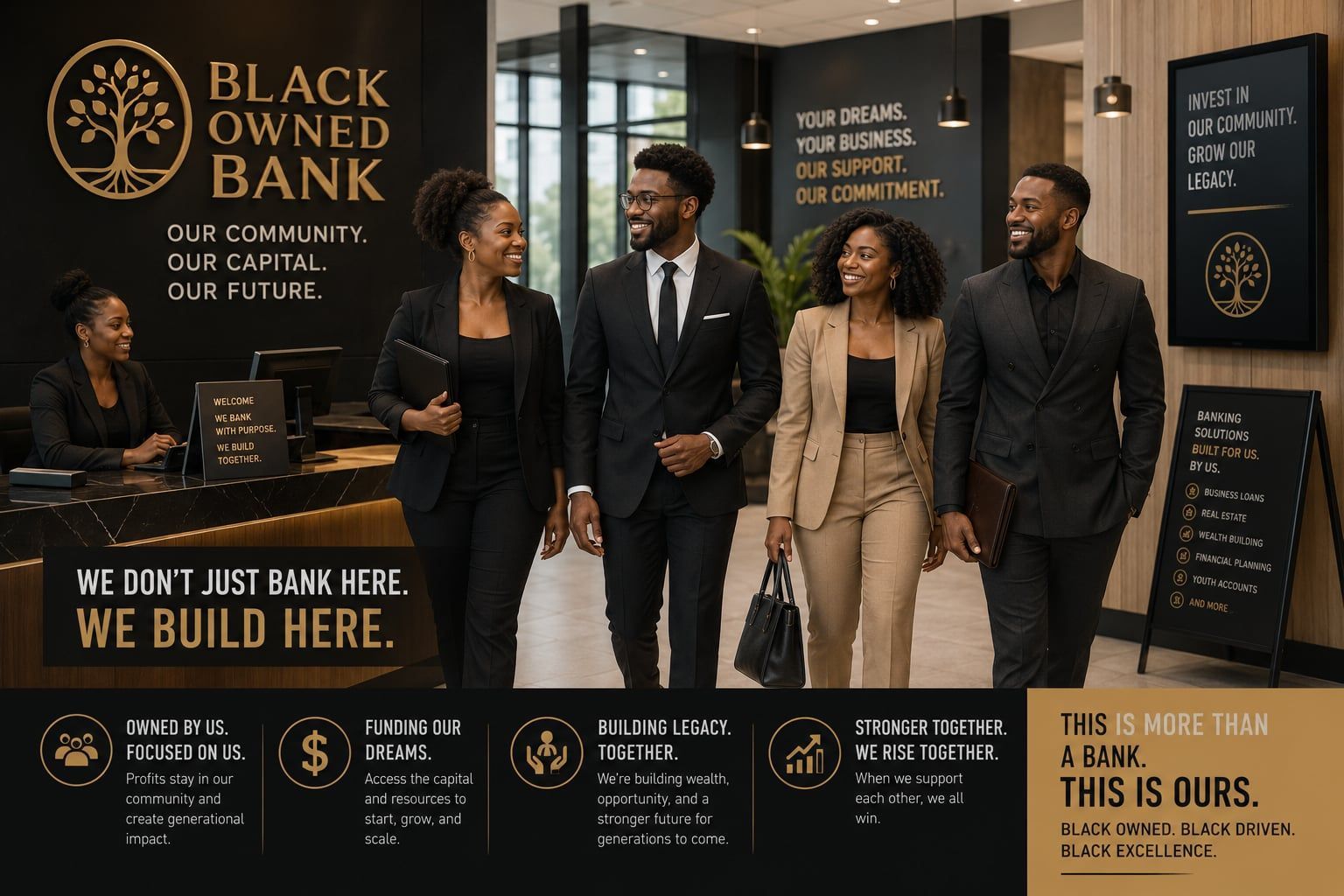
One of the most important economic shifts African Americans can make is moving from a consumer mindset to an ownership mindset. Modern society constantly encourages spending. Social media promotes lifestyles centered on luxury purchases and instant gratification. However, wealth is rarely built through consumption alone. Real wealth comes from owning assets. Assets are things that produce income or appreciate in value over time. Businesses, commercial buildings, intellectual property, stocks, and land are all examples of assets. Many successful communities place a strong emphasis on ownership because ownership creates leverage and independence. Owners receive profits. Owners make decisions. Owners pass assets to future generations. This does not mean people should never enjoy their money. It simply means creating a healthier balance between spending and investing. The long-term goal should be building systems and assets that continue producing opportunities long after individual purchases have been forgotten.
Financial Literacy: Teaching Money Instead of Chasing Money
For a collective self-funding system to succeed, financial literacy must become one of the highest priorities in the Black community. Too many people are taught how to earn a paycheck but are never taught how to make money work for them. Schools often focus on preparing students to become employees rather than owners, investors, and entrepreneurs. As a result, many people enter adulthood without understanding budgeting, investing, credit, taxes, cash flow, or business ownership. A portion of the collective fund could be dedicated to creating financial literacy programs specifically designed for African Americans. These programs could teach children, teenagers, and adults about entrepreneurship, real estate investing, credit management, stock market investing, wealth preservation, and digital business opportunities. Financial education changes how people think about money. Instead of seeing money only as something to spend, people begin to see money as a tool for creating opportunities and building assets. The more financially educated a community becomes, the more difficult it becomes for that community to remain economically dependent.
Stronger Together: The Power of Unity and Networking
Another critical ingredient in building a successful self-funding system is unity and intentional cooperation. African Americans possess incredible talent across every industry imaginable. Black doctors, engineers, truck drivers, real estate investors, content creators, software developers, electricians, artists, and business owners are making contributions throughout the country. However, too often these talents operate separately instead of strategically working together. Imagine the impact if thousands of professionals intentionally supported one another's businesses, invested together, shared opportunities, and mentored younger entrepreneurs. Collective economics creates stronger business ecosystems because relationships often become the bridge to opportunity. Networking can lead to partnerships, investments, referrals, and job creation. Communities become stronger when people stop seeing each other as competition and begin viewing each other as resources and partners. Supporting Black businesses and intentionally circulating dollars within the community does not mean excluding anyone else. It simply means recognizing that cooperation and economic organization are necessary if future generations are going to inherit stronger financial foundations.
The $10 Revolution Can Build a New Economic Future
African Americans already possess everything needed to create powerful economic systems. The community has talent, creativity, influence, entrepreneurship, and tremendous spending power. What is often missing is organization, long-term planning, and collective investment. A system where 500,000 people contribute just $10 each month could generate $5 million every month and $60 million every year. Those funds could purchase commercial real estate, launch business incubators, renovate neighborhoods, create educational programs, and help build sustainable businesses that provide jobs and opportunities. The future of Black economic empowerment will not come from waiting for someone else to solve our problems. It will come from ownership, self-funding, discipline, and collective action. The goal is not simply to survive financially. The goal is to build systems that create wealth for generations yet to come. Every great movement starts with a simple idea and consistent action. Perhaps the next great economic movement in America begins with something as simple as 500,000 people deciding that $10 a month is not an expense—it is an investment in themselves, their communities, and their future.
share this
Related Articles
Related Articles

STAY UP TO DATE
kEEP UP WITH WHAT'S GOOD AT MYBROTHASPOT
Receive frequent updates from Mybrothaspot, and get a heads up on upcoming events.
Contact Us